Stair Challenge
- 3.9
- Rating
- 100.00K
- Installs
- Free
- Price
 Analysis by App-foxy
I went into Stair Challenge expecting a very small, immediately understandable racing game, and that is exactly the kind of experience it offers. The idea is simple: move upward through a staircase while managing your effort so you do not become exhausted. That simplicity is not a weakness by itself. It gives the game a clear identity, a short learning curve, and a format that works well when I want something I can understand within moments rather than a large racing package that asks for a long tutorial.
What surprised me more was how much the game depends on mood. There is no need for an elaborate racing circuit when the staircase itself becomes the setting, the obstacle, and the source of tension. Every upward movement feels like a small test of control. The question is not only whether I can go faster, but whether I can keep a sensible rhythm instead of wasting energy too early. That makes the experience feel closer to a compact endurance challenge than to a traditional car race.
Developed by RevolutionGames Studio, this free racing game has reached over 100 thousand installs and holds a 3.9 average from roughly 300 ratings. Those figures suggest a modest but real audience rather than a huge mainstream hit. I also found that its appeal is quite specific: it suits players who enjoy short, focused challenges, while people looking for cars, tracks, upgrades, or a large competitive system may quickly feel that the concept is too narrow.
You May Also Like

 Pandora - Music & Podcasts
Pandora’s Music Is Easy to Start, but Harder to Recover
Pandora’s strength is its low-effort path from a seed to a station. Its weak spot is how much confidence it asks you to place in connection, setup, and quiet recovery.

 8 Ball Pool
 Is Built on Rivalries, Rematches, and Routine
A close look at the rivalries, rematches, shared routines, and unanswered safety questions that turn a quick pool match into a persistent mobile community.

 Samsung Music
’s Quiet Strength Is Playing What You Already Own
Its reach comes less from spectacle than from dependable access to a personal library. That simplicity is both the app’s strongest retention engine and its ceiling.

 AccuWeather: Weather Radar
AccuWeather Review: A Quick, Clear Forecast for Everyday Decisions
For everyday plans, the best forecast is the one you can understand quickly. AccuWeather makes rain timing, radar, and local conditions easy to act on, with a few trade-offs.

 Hill Climb Racing
Why Hill Climb Racing Still Turns Crashes Into One More Run
A tiny car, a bumpy hill and one more upgrade: Hill Climb Racing keeps resurfacing because its simple chaos makes every near-miss feel personal.

 AliExpress - Shopping App
AliExpress Makes Global Shopping Feel Personal, but Shoppers Bear the Risk
AliExpress turns a global marketplace into a pocket-sized discovery engine. Its reach is useful, its shopping loop compelling, and its trade-offs easy to miss.
More From Our News Desk
View All News


How the staircase sets the mood from the first run
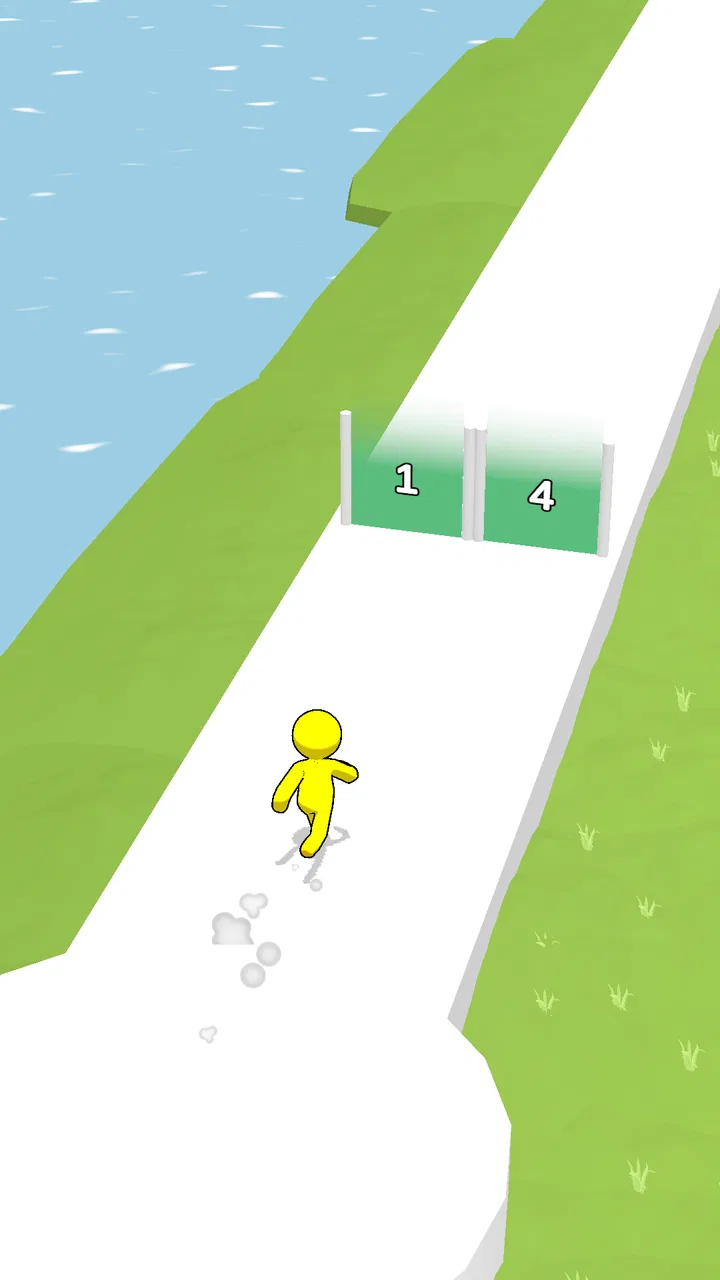
The first impression is built around restraint. The store summary describes the central idea as climbing stairs without getting tired, and the game stays close to that premise instead of surrounding it with unrelated systems. That gives the opening a clean direction. I do not have to decode a complicated world before playing; I can concentrate on the staircase and the pace of the climb.
That setting also changes the emotional tone of the racing category. A conventional racing game usually creates excitement through speed, traffic, sharp turns, or the visual rush of passing scenery. Here, the tension comes from repetition and effort. The staircase is visually familiar, but the climb makes it feel like a place where every step matters. The result is less about spectacle and more about maintaining composure.
I think that is the strongest artistic choice in the game. The setting is not merely a background placed behind a mechanic. It explains why stamina matters. A staircase naturally suggests fatigue, hesitation, and the temptation to push too hard. Because the environment and the main rule point in the same direction, the experience feels coherent even though the premise is small.
There is also a useful psychological shift once I stop treating the game like a normal race. If I approach it expecting constant speed, the climb can feel restrictive. If I treat it as a pacing exercise, the structure becomes easier to appreciate. My attention moves from “How quickly can I finish?” to “How long can I keep a reliable rhythm?” That is a more patient kind of challenge, and it will not suit everyone.
For a quick everyday session, this focus is convenient. I can imagine opening it while waiting for an appointment or taking a short break from work, playing a few attempts, and closing it without feeling that I have abandoned a long campaign. The game does not need a large time commitment to make its central idea understandable. Its compact nature is one of its practical strengths.
At the same time, the narrow concept creates an obvious trade-off. Players who need constant novelty may find the staircase less exciting after the initial curiosity fades. The game’s atmosphere depends on enjoying small changes in timing and performance. If that kind of repetition feels more like routine than challenge, the setting cannot carry the experience on its own.
A visual language built around effort rather than spectacle
The art direction works best when it supports the physical idea of climbing. A staircase is a strong visual symbol because it gives the player an immediate sense of direction: upward is progress, and each step is a visible unit of achievement. That clarity matters in a game where the main objective is so concentrated. I never need to wonder what the environment is asking me to do.
What I appreciate is the way the setting gives the game a distinct personality without needing the usual racing imagery. There are no obvious demands for a garage, a collection of vehicles, or a broad map to make the activity feel like racing. Instead, the staircase turns movement itself into the event. That makes the game feel almost like a visual exercise in persistence, with the environment constantly reminding me that control is more important than decoration.
The downside is that a single visual idea has limited room to surprise. In a larger racing game, a new track, weather condition, vehicle, or rival can refresh the mood. In this case, the staircase remains the dominant language, so the presentation has to rely on the satisfaction of the climb. I would recommend it more readily to someone who likes minimalist challenges than to someone choosing a racing game mainly for visual variety.
One useful way to play is to watch the environment as a timing reference rather than treating it as scenery. I found that concentrating on the regular visual pattern of the steps helped me avoid frantic inputs. This is a small but important adjustment: the staircase can become a metronome for the run. Instead of reacting emotionally when progress slows, I can use the repeated structure to settle into a steadier pace.
That approach also reveals a subtle strength. The game can create tension without needing a crowded screen. A quiet, uncluttered setting leaves more room for the player to notice mistakes. When the challenge is about fatigue, visual simplicity can make each poorly timed push feel more personal. The presentation therefore supports the mechanic by keeping attention on the relationship between movement and endurance.
Why the sound and rhythm matter more than expected
In a game this focused, sound has an important job: it helps define the rhythm of the climb. Even when the underlying action is simple, the player needs a sense of timing. A good rhythm makes the staircase feel active; a poor rhythm can make the same movement feel flat and mechanical. I found myself judging the experience less by the size of its world and more by whether the audiovisual flow made each attempt feel purposeful.
The best way to approach the game is to avoid rushing simply because it belongs to the racing category. The word “race” can encourage aggressive play, but the fatigue idea asks for control. I prefer to let the visual movement and audio feedback guide my tempo, using short attempts to learn when I am overcommitting. This turns the game into a small practice loop: act, notice the result, adjust, and try again.
That rhythm is especially useful in short sessions. If I have only a few minutes, I do not need a complex objective to stay engaged. I can focus on improving the consistency of my climb rather than chasing a long-term collection of content. The game’s mood comes from that repeated concentration, which is a different kind of satisfaction from the constant stimulation offered by many mobile racers.
There is a limitation here as well. Players who expect a dramatic soundtrack or an energetic arcade presentation may find the mood too restrained. The staircase concept naturally creates a quieter atmosphere, and that means the sound design cannot be judged by the standards of a spectacular car-racing game. Its role is to reinforce pace and effort, not to turn every moment into a cinematic event.
I also would not recommend relying on sound alone when learning the game. The visual structure is too important to ignore, and a player who watches only for audio cues may miss the way the climb communicates timing. A better routine is to use both: watch the step pattern, listen for feedback, and then make smaller adjustments instead of sudden changes. That combined approach makes the game feel more readable.
Where the racing mechanics fit, and where they do not
Calling this a racing game is accurate in the broad sense that progress and pace are central, but it does not resemble a typical track racer. There is no reason to approach it expecting drifting, overtaking, vehicle tuning, or a broad collection of courses. Its mechanical identity is much closer to controlled upward movement, with fatigue acting as the main pressure. That distinction is important before downloading it.
The mechanic fits the setting because the staircase gives every decision a physical meaning. Moving too aggressively is not just a bad button press; it represents spending energy carelessly. Holding back is not passive play; it is a way to preserve the ability to continue. This connection between action and theme is the game’s most convincing design feature.
I found the game more enjoyable when I treated each attempt as a pacing experiment. On one run, I might try to climb briskly and observe where the effort becomes unsustainable. On another, I might deliberately use a calmer rhythm to see whether consistency produces better progress. This is one of the less obvious ways to get more from the game: do not measure every attempt only by success or failure. Use failed runs to identify the point where your tempo stops being efficient.
That makes it suitable for players who enjoy self-improvement without a complicated progression system. The challenge comes from refining personal control. It can also work for younger or less experienced players who want a straightforward racing concept, although the Teen content rating means families should still check whether the game fits their household expectations before handing it over.
It is less suitable for anyone seeking a full racing hobby on mobile. If what you want is a garage, detailed car handling, rivals, long championships, or a strong sense of speed, a conventional racing title will be a better choice. Stair Challenge is not trying to replace those games. Its appeal is that it removes almost everything except movement, effort, and the climb.
Another practical trade-off is replay value. A focused mechanic can be replayable when small improvements feel meaningful, but it can also become repetitive if the player needs frequent new environments. I would decide based on how much I enjoy repeating a short challenge to improve timing. The game is a better fit for that mindset than for someone who plays racing games mainly to explore new locations.
Small habits that make each attempt more useful
My first tip is to begin with observation rather than speed. The opening moments of a run are a chance to identify the game’s movement rhythm. If I immediately push for maximum progress, I learn less about how fatigue affects the climb. A measured first attempt gives me a reference point, making later changes more deliberate.
My second tip is to separate a control mistake from a pacing mistake. If I fail because I misread the staircase or mishandled movement, I should practice precision. If I fail because I spent too much energy early, I should change the rhythm. Treating both problems as “I need to go faster” usually makes the second one worse. This distinction is particularly valuable because the game’s simplicity can hide the reason an attempt went badly.
My third tip is to play in short blocks instead of forcing a long session. The premise is about avoiding exhaustion, and that idea applies to the player as well. After several attempts, frustration can make me rush inputs and lose the calm timing the game rewards. A brief pause can be more useful than immediately repeating the same mistake.
A fourth useful approach is to choose the game according to your surroundings. It works well when I want a compact challenge that does not require learning a large map, but it is not ideal when I am looking for a visually loud game to fill a long journey. In a quiet break, the controlled atmosphere can be appealing. During a long gaming session, the limited setting may feel too slight.
The current version is 1.1.1, and the game runs on Android devices using version 8.0 or later. That makes it accessible to people who are not using the newest phone, although actual comfort will still depend on the device and the player’s preference for screen responsiveness. Since the game depends on timing, I would pay attention to whether controls feel consistent on the particular phone or tablet being used.
It is free to play, which lowers the risk of trying such a specialized idea. I can test the central rhythm without committing money first. That is useful here because the question is not whether the game is technically impressive, but whether its narrow staircase challenge matches my taste. A free download makes that personal experiment easier.
Who should climb, and who should choose another racer
I would recommend it to players who like compact arcade challenges, simple objectives, and the satisfaction of improving a personal rhythm. It is also a reasonable choice for someone who wants a racing game that does not demand a long tutorial or a large commitment. The staircase setting gives it a recognizable identity, while the fatigue mechanic provides more thought than the one-line premise might suggest.
It may also appeal to people who enjoy games with a calm but slightly tense atmosphere. The mood is not built from explosions or dramatic competition. It comes from the contrast between wanting to move upward quickly and knowing that careless effort can end the attempt. That tension is gentle, but it is enough to give the climb a purpose.
I would skip it if I need a broad racing package. Players looking for realistic driving, a large selection of tracks, online competition, vehicle customization, or a strong story should spend their time elsewhere. The game’s value is concentrated in one idea, and no amount of goodwill can turn that into the variety offered by a full-featured racer.
The Teen rating is another reason to make a personal suitability check, especially for younger players. The game’s basic premise is easy to understand, but age suitability should not be judged only by the simplicity of the controls. I would look at the rating before recommending it to a child, even if the game seems approachable at first glance.
Its audience size, reflected by more than 300 ratings and over 100 thousand installs, suggests that it has found players without becoming a dominant racing name. I see that as a fair description of its position: it is a niche, free game with a clear hook. The 3.9 average feels consistent with that kind of product, where some players will appreciate the focus while others will want more depth and variety.
My verdict on the climb
Stair Challenge succeeds when I judge it on its own terms. It takes the familiar idea of racing and reduces it to upward movement, rhythm, and energy management. The art direction gives the staircase a functional role, the sound and pacing can support concentration, and the mechanical theme matches the setting instead of feeling pasted onto it.
Its main weakness is also its defining feature. The experience is so focused that players who need new tracks, vehicles, or dramatic presentation may run out of reasons to continue. I would not call that a design failure; it is a clear trade-off. The game chooses a small, repeatable challenge over a broad racing system.
For me, that makes it worth trying when I want a free, quick game with a distinct mood and a little more thought than its simple premise suggests. I would approach it patiently, use the staircase as a timing guide, and judge progress by consistency rather than reckless speed. If that sounds satisfying, RevolutionGames Studio’s compact climb has a good chance of fitting your mobile library. If you want the excitement of a conventional racer, this is better treated as a curious side option than as your main racing game.
FAQs for Stair Challenge
01What is the main objective of the Stair Challenge app?
The Stair Challenge app is designed to encourage users to incorporate more physical activity into their daily routine by climbing stairs. The app tracks your progress, sets daily goals, and provides motivational challenges to keep you engaged and motivated. It aims to improve fitness levels and overall health through this simple yet effective exercise.
02Is the Stair Challenge app suitable for beginners?
Yes, the Stair Challenge app is suitable for users of all fitness levels, including beginners. It offers customizable goals and adjusts challenges based on your progress. The app provides tips and guidance to help newcomers ease into a stair-climbing routine, ensuring a safe and effective workout experience.
03Does the Stair Challenge app require an internet connection?
The Stair Challenge app primarily functions offline, allowing users to track their stair-climbing activities without needing an internet connection. However, connecting to the internet enables additional features like syncing your progress with cloud storage, sharing achievements on social media, and accessing community challenges.
04Are there any in-app purchases or subscriptions in the Stair Challenge app?
The Stair Challenge app offers a free version with basic features, but it also includes in-app purchases for advanced features such as personalized training plans, detailed analytics, and ad-free usage. Users can opt for a subscription model for ongoing access to premium content and exclusive challenges.
05How does the Stair Challenge app track my stair-climbing activity?
The Stair Challenge app utilizes your device’s built-in sensors, like the accelerometer and gyroscope, to detect stair-climbing movements accurately. It calculates the number of stairs climbed, calories burned, and time spent on the activity. For more precise tracking, ensure your device is securely carried during exercise.
Pros
- Engaging gameplay with simple controls.
- Variety of levels to keep players interested.
- Colorful graphics enhance user experience.
- Quick sessions perfect for short breaks.
- Regular updates with new challenges.
Cons
- Advertisements can interrupt gameplay.
- Limited offline functionality.
- In-app purchases can be costly.
- Requires frequent internet connection.
- May drain battery on older devices.

Stair Challenge
Gallery